

How to Start a Travel Blog with WordPress (With Theme Recommendations)
Do you dream of travelling the world, sharing your adventures, and getting paid to do it? You aren’t alone. Many people want to start a travel blog, but the technical side of setting things up often feels overwhelming.
The good news is that nowadays, you don’t need to be a developer to build a professional site. Whether you want to document your gap year or build a full-time business, WordPress makes the process incredibly straightforward.
In this guide, we will show you exactly how to start a travel blog from scratch. We’ll cover everything from technical setup to travel blog website design, and even how to turn your passion into a paycheck.
What Do You Need to Start a Travel Blog?
Before we dive into the steps, you’ll need three main things:
- A domain name: This is your website’s address
- Web hosting: This is where your website lives on the internet.
- Your focus: You can have a professional blog up and running in less than an hour.
In this step-by-step tutorial, we will have the following stages:
- Choose the Right Blogging Platform
- Pick Your Domain Name and Hosting
- Install WordPress
- Select a Professional Travel Blog WordPress Theme
- Planning Your Travel Blog Website Design
- Create Your First Content and Categories
- How to Make Money Travel Blogging
Step 1: Choose the Right Blogging Platform
For most beginners, the biggest mistake when learning how to start a travel blog is not choosing the right blogging platform. If you pick the wrong one at the start, moving your content later can be a massive problem.
Since you want to build a professional site that looks great and has the potential to grow, we highly recommend using WordPress.org (also known as self-hosted WordPress).
It is the most popular website builder in the world, for it gives you total control over your website. Whether you want a custom travel blog website design or specific tools to help you start a travel blog that reaches a global audience, such as the best WordPress multilingual plugins, WordPress.org is the industry standard.
You also need to be careful to distinguish WordPress.org from WordPress.com, as they are two different platforms. For a deep dive, check our comparison of WordPress.com vs. WordPress.org.
WordPress.org vs. WordPress.com: What’s the Difference?
It is very common for beginners to confuse these two, but they are quite different:
- WordPress.org: This is the free, open-source software you install on your own web hosting. It gives you 100% ownership of your site and allows you to install any travel blog WordPress theme or plugin you want.
- WordPress.com: This is a hosting service (similar to Wix or Squarespace). While it’s easy to set up, the free and lower-tier versions are very limited. They often restrict your ability to run ads or use custom themes, which makes it much harder to learn how to make money travel blogging.
Why Self-Hosted WordPress is Best for Travelers
When you are out in the field, you need a platform that is flexible. Here is why professional travellers choose the self-hosted version:
- Full Monetisation: You can add affiliate links, sell digital guides, or run display ads without the platform taking a cut or restricting you.
- Customisation: You have access to thousands of templates, allowing you to create a unique travel blog website design that matches your photography and brand.
- Plugins: You can add powerful features like interactive maps, Instagram feeds, and SEO tools that aren’t available on “closed” platforms.
To get started with WordPress.org, you will need two things: a domain name (your site’s address) and web hosting (where your files live). In the next step, we will show you exactly how to pick the best ones for your new journey.
Step 2: Pick Your Domain Name and Hosting
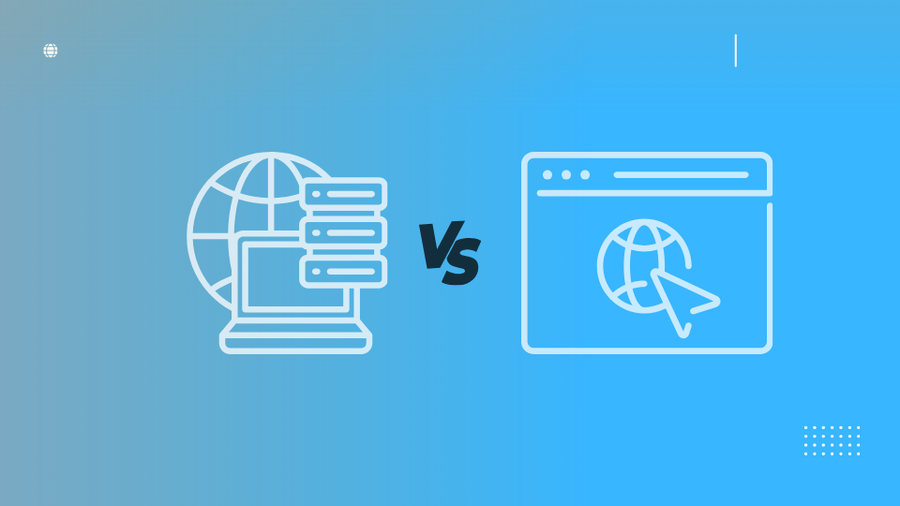
Once you have decided on WordPress, the next step in learning how to start a travel blog is picking your domain name and web hosting.
- Domain Name: This is your address on the internet. It is what people type into their browsers to find you.
- Web Hosting: This is the place where your website files live. Every website on the internet needs hosting.
When you start a travel blog, your domain name is your brand. It’s the first thing people see, so you want to get it right.
Tips for Choosing a Travel Blog Domain Name
- Stick with .com: It is the most recognised and easiest for people to remember.
- Keep it short and catchy: Aim for 2–3 words. Avoid using hyphens or numbers, as they make your site harder to find.
- Make it easy to spell: If you have to explain how to spell your blog name every time you mention it, it’s probably too complicated.
- Think long-term: Don’t pick a name like EuropeOn20Dollars.com if you plan to change the destination or increase your budget later.
Expert Tip: If your dream domain name is taken, try adding a verb like “Go,” “Travel,” or “Explore” to the beginning.
For hosting, you want a provider that is fast and reliable. You can compare the best WordPress hosting providers to find a host that can handle large traffic, has more storage and assures faster average loading speed. Website speed is a major factor in travel blog website design because slow-loading images will frustrate readers and hurt your SEO.
Step 3: Install WordPress
After you have signed up for your hosting account, you need to install WordPress. Most modern hosting providers have made this incredibly simple.
In the past, you had to go through complicated steps to do it, but now most hosts offer a dedicated “Install WordPress” button inside their dashboard.
The Installation Process
- Log in to your hosting account dashboard.
- Locate the WordPress setup.
- Choose your domain name.
- Click Install.
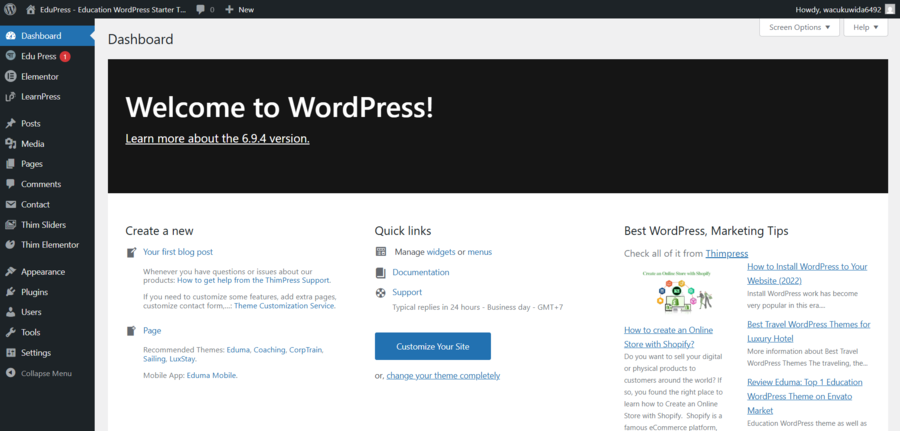
Once the installation is complete, you will be automatically taken to your WordPress dashboard
If not, you can enter your domain name in the search bar, followed by /WP-admin and then search. You can see the login screen for your WordPress account.
In here, just type in your WordPress account, email again and also your password and click on login. And this will take you to your WordPress dashboard
Exploring the WordPress Dashboard
When you first log in, the WordPress dashboard can look a bit intimidating, but it is actually very organised.
On the left-hand side, you will see a menu where you can manage your posts, upload photos of your trips, and change your travel blog website design. This is also where you will eventually install your travel blog WordPress theme to give your site its unique look.
Now that your site is live and the software is installed, you are ready to move on to the part to make it look professional
Step 4. Choosing a Travel Blog WordPress Theme
Themes are one of the most exciting parts of using WordPress. They allow you to control every design and appearance of your website, and there are thousands of options available to help you start a travel blog, including choosing a free travel blog WordPress theme to keep startup costs low..
WordPress can help you find a huge variety of templates tailored specifically for travellers and digital nomads.
Even free themes are customizable. Most allow you to easily change your blog layout, fonts, logo,… to match your brand. This flexibility is essential for creating a unique travel blog website design.
When selecting a theme, you want to find one that matches the specific brand identity. Keep it simple, choose a theme that looks simple and clean. You can always add more functionality later with plugins.
If you want to have a specific and easy guide to install it, here is our guide on how to install a WordPress plugin for you.
Top Theme Recommendations
There are thousands of themes available, but you can see our expert picks for the best WordPress themes for travel blogs. If you need a booking system or magazine-style layout, here are some of them:
1. Sailing
Link: Sailing
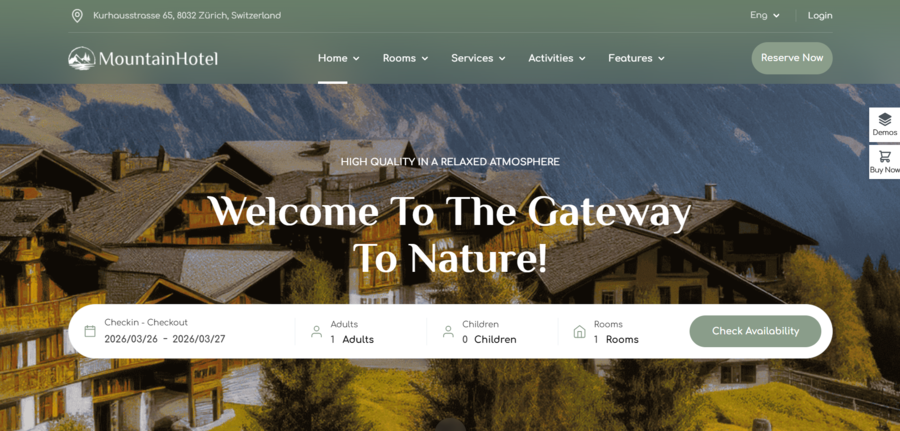
A specialised travel blog WordPress theme designed for booking. It includes dedicated sections for your booking checkout and travel article.
2. Travel Tour

Link: Travel Tour
Great for those who want a lot of built-in features like sticky footer and social icons. It works seamlessly with page builders like Elementor.
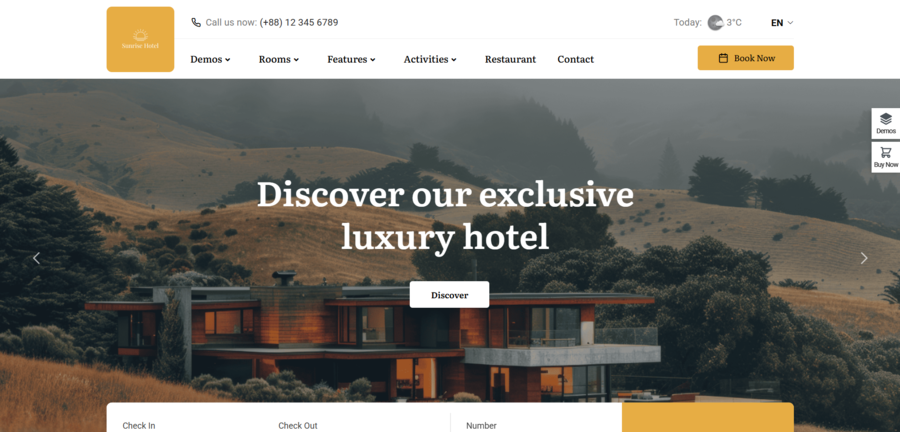
3. LuxStay
Link: LuxStay
A lightweight, highly customizable theme for travel bloggers. It’s perfect if you want a professional travel blog website design without needing to code.
Step 5. Planning Your Travel Blog Website Design
Choosing a theme is just the beginning. To make your site easy to navigate, you need to plan your travel blog website design around the user experience.
Essential Layout Elements
To keep your readers engaged, your design should include:
- A Clear Navigation Menu: Organise your content by “Destinations,” “Travel Tips,” and “Gear Reviews.” This helps users find what they need in seconds.
- High-Quality Image Galleries: Travel is a visual medium. Use a plugin like Envira Gallery to create beautiful, responsive galleries that don’t slow down your site.
- An “About Me” Section: People follow travel blogs because of the person behind them. Make sure your design features a prominent bio so readers can connect with you.
- Interactive Maps: Adding a Google Map or a custom travel map allows readers to see exactly where your adventures took place.
Mobile Responsiveness
Most travel content is consumed on mobile devices while people are actually on the go. When planning your travel blog website design, always check how it looks on a smartphone. A good travel blog WordPress theme will be “responsive,” meaning it automatically adjusts to any screen size.
By focusing on a clean layout and easy navigation, you build a foundation that makes it much easier to eventually learn how to make money travel blogging.
Step 6. Adding Content to Your New Travel Blog
After you have installed your travel blog WordPress theme, it is time to start adding content. This is where your blog truly comes to life.
WordPress comes with two main types of content: Posts and Pages.
- Pages: These are for content that doesn’t change much. To start a travel blog correctly, you should create an About page, a Contact page, and a Privacy Policy page first. This helps build a professional structure for your travel blog website design.
- Posts: These are your actual travel entries, guides, and stories. They appear in reverse chronological order on your blog page.
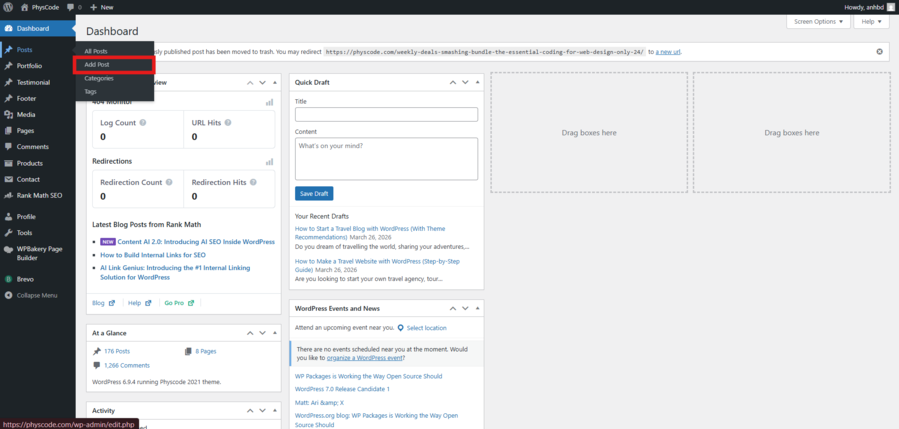
To write your first post, simply go to Posts » Add New in your dashboard. You can use the WordPress block editor to add text, travel photos, videos, and even image galleries of your latest trips.
Content Ideas for a Great Travel Blog
Developing your own unique style is key to a successful blog. Your posts should be informative, entertaining, and helpful for your readers. If you aren’t sure what to write about first, here are some proven ideas:
- Destination Guides: Share the best things to do in a specific city.
- Budget Breakdowns: Tell your readers exactly how much your trip cost.
- Packing Lists: Show the gear and clothes you never travel without.
- Travel Tips: Share advice on how to find cheap flights or stay safe.
Visiting other popular travel blogs for inspiration is also recommended. Find out what topics they cover and think about how you can add your own unique flavour to similar subjects.
You also need consistent articles for your website. Start with three articles a week and then slowly build up your pace is a good way.
Step 7. How to Make Money Travel Blogging
Many people want to learn how to start a travel blog using the best free travel WordPress themes because they want to earn an income while exploring the world. While it takes time and consistency, there are several proven ways to monetise your site.
1. Affiliate Marketing
This is one of the most common ways to earn. You recommend travel products, hotels, or gear that you actually use, then find out if those travel products and brands offer affiliate programs. These could be tour companies, gear providers, and so on.
When a reader clicks your link and makes a purchase, you earn a small commission at no extra cost to them.
2. Display Advertisements
Once your blog gets a steady stream of traffic, you can include ads in your travel blog. You can use Google AdSense to connect with the advertisers.
These ads are displayed to your readers, and you get paid based on how many people see or click them.
3. Sponsored Content
As your influence grows, travel brands and tourism boards may pay you to visit a destination or review a product. Or you can reach out to these organisations yourself and find out where other travel bloggers are getting sponsored.
This is a popular way to learn how to make money travel blogging while getting your travel expenses covered.
4. Selling Digital Products
After having quiet lots of followers, you can create and sell your own travel guides, photography presets, or even e-books. This is a great way to earn “passive” income because you create the product once and can sell it to thousands of readers.
5. Offering Services
If you have become an expert in a specific region, you can offer custom travel planning services or 1-on-1 consulting for others who want to start a travel blog themselves.
Expert Tip: Don’t try to use all of these methods at once. Focus on building great content first, and the monetisation opportunities will follow naturally.
Frequently Asked Questions (FAQs)
Can I blog about travel if I don’t travel full-time?
Absolutely! Many successful bloggers focus on local staycations, weekend trips, or specialised niches like hiking or budget food. You don’t need a plane ticket to provide value.
Is the travel blogging niche too crowded?
While there are many blogs out there, there is always room for a unique perspective. Your personal “voice” and specific travel blog website design are what will help you stand out from the crowd.
How long does it take to make money?
It varies, but most bloggers see significant traction after months of consistent posting. Learning how to make money travel blogging is a marathon, not a sprint, but the rewards are worth the effort.
Conclusion
Learning how to start a travel blog is one of the most rewarding projects you can take on. It gives you a platform to share your world, build a community, and potentially create a life of freedom.
By using WordPress, you are giving yourself the best possible foundation to grow. Don’t worry about being perfect from day one; the most important part is simply getting started.
Read more: 10 Best Travel WordPress Themes for Travel Bloggers & Agencies
You may also like
Free vs Premium Travel WordPress Theme: What Should You Choose?
Posted on April 29, 2026Building a travel website is an exciting venture, whether you are documenting personal journeys or launching a professional tour agency. However, one of the first technical hurdles you will face is selecting the right foundation for your site. The debate over a free vs premium travel WordPress theme is a common starting point for

How to Make a Travel Website with WordPress (Step-by-Step Guide)
Posted on March 27, 2026Are you looking to start your own travel agency, tour company, or destination blog? In the past, building a professional booking platform required a massive budget and a team of developers.
Fortunately, things have changed. With the right tools, anyone can create a travel agency website that looks professional and functions